This guide explains how to evaluate Rose Rocket—its intended use, material and performance considerations, and realistic purchase expectations. Objectively, “Rose Rocket” typically functions as a rose-themed, novelty or aromatics-adjacent product concept. Background context covers how such items are assessed for quality, safety, and value using supplier documentation, batch consistency, and consumer-facing testing practices.
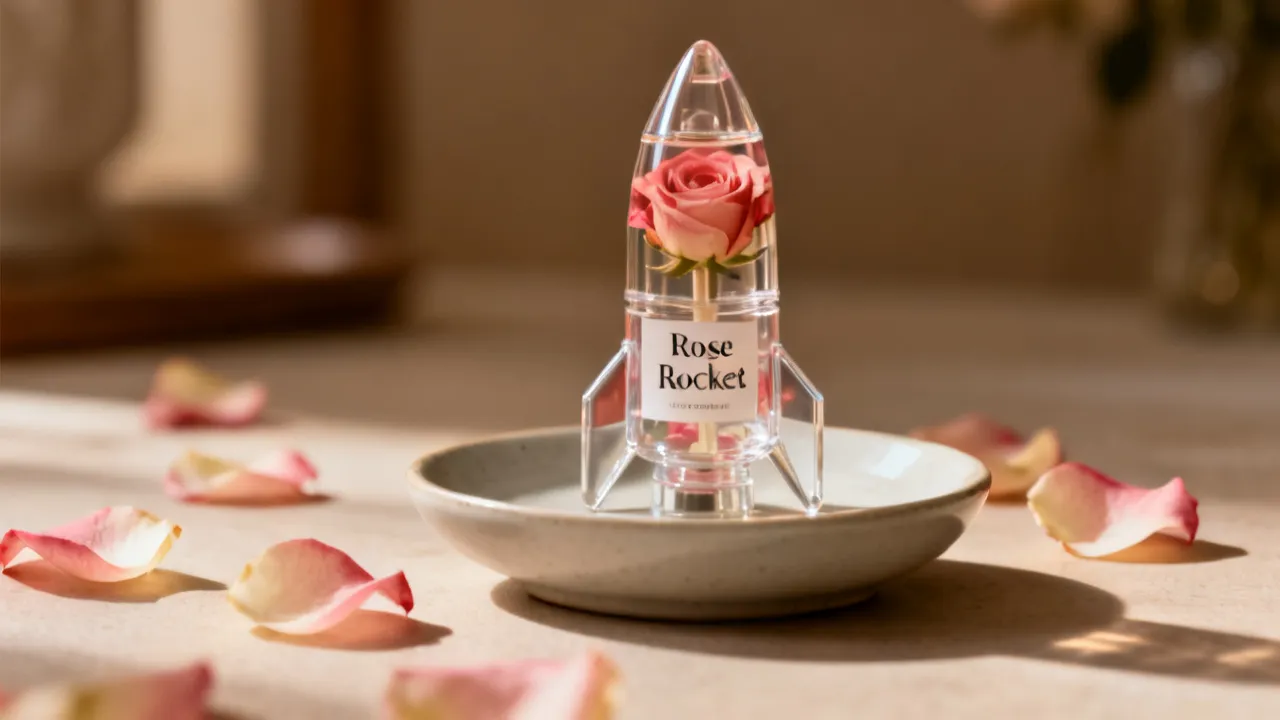
When selecting Rose Rocket, the very important step is to verify what the product actually is (a fragrance, a decorative novelty, a scent diffuser, a candle-like item, or another rose-and-rocket themed application) and match it to your intended use. From an industry-expert perspective, value is determined less by the name and more by materials, formulation details, safety documentation, batch consistency, and supplier transparency. If a listing also includes a price, treat it as a starting point—confirm what that price includes (size, refill schedule, accessories, packaging format, and whether shipping or taxes are separate).
Because “Rose Rocket” is often presented as a brandable, theme-driven product concept, buyers can encounter significant variation across suppliers. Therefore, evaluate the product specification rather than the theme. Look for information such as ingredient lists (when relevant), scent notes, burn time or diffusion time (if applicable), packaging and sealing method, and manufacturing or quality assurance practices.
In many markets, rose-themed products are popular because they combine familiar consumer expectations (a “rose” sensory profile) with distinctive design cues (“rocket” novelty). That combination can work well for gifts, event favors, desk decor, or seasonal displays—but only if the underlying quality is consistent. The sections below provide a professional, objective framework for assessment, including a comparison table, sourceable requirements, and conditions you should meet before purchasing.
Rose Rocket very commonly appears as a name for a rose-themed novelty or aroma-related item rather than a universally standardized category. That means different suppliers may offer different formats (for example: a decorative object with scent elements, an aromatics product with rose notes, or a gift set combining rose-scented components with rocket-styled packaging). The key is to treat the name as a descriptor until you confirm the product specification.
In objective terms, the “rose” portion signals a typical sensory target—rose-like notes or a rose-inspired fragrance profile. The “rocket” portion signals branding and design identity. Neither portion guarantees chemical composition, manufacturing grade, shelf life, or safety compliance. These attributes come from documentation, test reports where applicable, and clear labeling.
One common source of confusion is that “rose-and-rocket” themed products can be marketed like “everything in the box” gifts, while some components are actually separate purchases (refills, scent sticks, wicks, replacement cartridges, or additional packaging). Another confusion arises when a listing uses flexible language such as “aroma candle,” “scent diffuser,” or “home fragrance” interchangeably, when in reality the consumer experience differs substantially between a candle (burning with flame safeguards), a reed diffuser (passive diffusion with oils/solvents), a fan/ultrasonic diffuser (delivery method changes), or an aroma gel/solid item (different evaporation/heat interaction).
Therefore, even if two listings both say “Rose Rocket,” they might be entirely different types of products with different risks, setup steps, and longevity. Treat “Rose Rocket” like a label on the outside of a package; you still need to check what’s inside and how it works.
Price can be misleading in theme-driven products, because costs differ across manufacturing approaches: small-batch artisanal production versus mass-market manufacturing; premium fragrance concentrates versus lower-cost scent systems; reusable components versus single-use packaging. To evaluate value, compare price per usable unit rather than price per label.
Here are the practical components that usually determine cost and thus influence what you should compare when reviewing a “Rose Rocket” listing:
If you have a specific supplier or price quote in mind, the top next step is to request the underlying details: batch number, manufacturing date or shelf-life statement, material and ingredient information, and any compliance documentation relevant to your location. (Even when not legally required for novelty items, responsible suppliers often provide evidence for customer assurance.)
Another practical point: “nearby” sourcing can influence freshness. If you are buying from a supplier close to your region, the item may spend less time in transit, which can reduce the likelihood of seal compromise or temperature cycling for fragrance carriers. However, proximity is not the only variable—some products degrade in storage even before shipping. The real benchmark is consistent labeling, batch transparency, and instructions that acknowledge and manage performance variability.
When comparing prices, also consider what happens after purchase: Do you need additional items to make the product work? Are refills proprietary? Does the product come with replacement parts if something breaks? These are the questions that convert “cheap upfront” into “expensive total.”
From an industry expert standpoint, “Rose Rocket” should be assessed across three layers: specification clarity, performance expectation, and risk management. A product can look premium but still fail on practical dimensions such as scent stability, seal integrity, or labeling accuracy.
In practice, the best way to avoid disappointment is to treat the listing as a contract: it promises a certain product type, certain scent characteristics, and a certain safety profile. If those promises are vague, you are forced to guess. Your job as a buyer is to decide how much guessing is acceptable given the price and your use case.
The sections below expand the expert lens into a more actionable set of verification steps. Rather than only saying “check the label,” we explain what to check on different product formats, what questions to ask, and what “good answers” typically look like.
To make “specification clarity” truly useful, you need to decide what matters for your format. Here are common formats and the corresponding questions you should ask:
For any format, also look for clarity on what “rose” means. Some rose notes read “fresh-cut rose,” others “powdery rose,” “rose water,” or “rosy floral with sweetness.” If your intended use is gift-giving, you may want a rose profile that aligns with recipient preferences. If your use is office ambiance, you may want a profile described as soft or not overpowering. The clearer the description, the easier it is to match expectations.
Performance has multiple dimensions, and the listing may mention only one. For example, reed diffusers may last long but be weak; candles may be strong but short; aroma gels may be strong initially but fade quickly; decorative objects may look like scent items but actually release minimal odor unless placed near heat or airflow.
When evaluating performance, look for measurable or at least scenario-based indicators:
For “rocket”-themed branding, suppliers sometimes exaggerate “strength.” Instead of assuming “rocket = strong,” verify whether the product description provides intensity guidance. A responsible supplier will often include: “best in rooms up to X square meters,” “avoid direct drafts,” or “use in ventilated areas.”
Batch consistency is another practical performance factor. If a supplier can provide lot numbers and has an internal quality control process, the scent experience is more likely to remain consistent across purchases. If they cannot provide batch identifiers, your only option is to buy a single unit first and test it—especially if you are planning to use the product for events or as part of a brand package where consistency matters.
Finally, reusability matters for total value. If refills are available, verify they are compatible with the exact product. Proprietary bottle shapes or proprietary wicks/cartridges can create long-term dependency on a supplier. That dependency isn’t always bad, but it should be understood upfront.
Risk management should be viewed as a combination of consumer safety and practical “risk of failure.” Safety issues include flammability (for candles), skin or eye irritation concerns (for certain fragrance carriers), and risks associated with ingestion for products that might be attractive to children. Practical risks include leakage, cracked containers, or failure to diffuse as expected.
Even if a product is “just a novelty,” risk management is still relevant. If a product uses solvents or oils, it may be sensitive to temperature and may seep or stain depending on packaging. If it uses fragrance oils, it may also be sensitive to certain materials or finishes. If it’s a candle-like product, safety requires stable wick performance and correct burn behavior.
Check for disclaimers such as:
Also check whether the supplier uses credible labeling practices: net contents, manufacturer identity, and lot numbers. While legal requirements vary by region and product type, the presence of these details indicates maturity and accountability in the supply chain.
If ingredient lists are provided, treat them as a key part of safety evaluation. If ingredient lists are not provided, look for at least partial disclosures or hazard/safety statements. Some suppliers may be reluctant to disclose full fragrance composition due to trade secrets, but they should still provide safety guidance and labeling required for consumer products.
Supplier information matters because it correlates with accountability. A credible supplier typically provides: manufacturing identity, clear returns or replacement policies, and consistent product specs. When comparing offers, prioritize suppliers who:
Another “expert lens” for supplier details is to look at the consistency between text and images. If the listing says “includes two refills,” but the image only shows one, that’s an immediate mismatch. If the listing says “burns 30 hours,” but the photo shows a tiny container inconsistent with that claim, you should treat it as a red flag and request the exact net weight or volume. If the listing does not show any label close-up, ask for a photo of the ingredient/safety panel or batch/lot label.
When “Rose Rocket” variants show different price points, treat each variant as a different product configuration. A higher price does not automatically mean higher quality, but a lower price with sparse details often increases uncertainty about composition and performance.
It’s also wise to evaluate customer support behavior. Some suppliers respond quickly and answer format-specific questions (for example: “How many reeds?” or “Is it refillable?”). Others respond with generic marketing text. That response pattern is often a reliable indicator of product maturity and quality control.
The following table reframes key considerations as practical conditions you can apply during your purchase decision. It is designed for buyers evaluating Rose Rocket options across different suppliers.
| Evaluation area | What to verify | Why it matters | Pass condition (buyer requirement) |
|---|---|---|---|
| Product identity | Exact type (diffuser, fragrance item, decorative object, set) | Avoids mismatched expectations (scent strength, setup, lifespan) | You can clearly describe what it is in one sentence after reading the listing |
| Usable amount | Net contents, size, and whether refills exist | Enables price-per-use comparisons | You can calculate an estimated usage period or replacement interval |
| Materials and formulation | Ingredient or material disclosures when relevant | Supports safety and allergy-aware purchasing | Clear labeling is available for the key materials relevant to use |
| Instructions | How to use, recommended conditions, and ventilation notes | Reduces failure rates and unpleasant outcomes | Usage steps are explicit and realistic for home or office conditions |
| Batch consistency | Batch/lot identifiers and quality-control approach | Minimizes scent or performance variation | Supplier provides batch or lot reference on packaging or documentation |
| Packaging and shipping | Protection against leakage, breakage, and heat exposure | Scent products are sensitive to transit damage | Packaging is described with practical protective steps |
| Returns and support | Replacement/return terms and customer service responsiveness | Improves your risk posture | Clear policies exist, and support addresses product-specific questions |
To apply this table more effectively, you can convert each “pass condition” into a checklist score. For example, if a listing passes product identity and instructions but fails on batch identifiers, you might still buy for a one-off personal gift. But if you require consistency across many units (e.g., event favors), you should treat any failure on batch consistency and materials/formulation transparency as a reason to request more information or choose another supplier.
To further reduce uncertainty, consider a “two-stage purchase” approach:
This approach is especially useful when you need multiple items for a consistent experience. It also helps when you are choosing between “Rose Rocket” variants that look similar but differ in scent intensity, packaging, or refill compatibility.
Specialty consumer goods often combine creative branding with functional performance. In the case of Rose Rocket, the “theme” may be the differentiator, but the functional components—fragrance carriers, diffusion mechanisms, container materials, or finishing—determine whether the buyer experience matches the marketing presentation.
Across the industry, buyers encounter variance due to:
Theme-driven products also tend to shift faster than core commodity items. When a supplier designs a “rocket” novelty concept, they might source different materials seasonally, use different packaging suppliers, or change fragrance carriers without prominent notice. That’s why batch identifiers, lot numbers, and consistent documentation become important. Without them, you can’t tell whether the “same Rose Rocket” you bought last time is actually the same product.
Some suppliers may also run limited edition runs. In such cases, the product you receive might not be repeatable. If your use case requires predictability, verify whether the item is a seasonal limited edition or a steady SKU. If it is limited, ask for a restock plan, or consider buying extra during the current availability period.
Finally, note that perceived “quality” often differs from functional quality. A decorative container could be beautiful but still function poorly (e.g., diffusion blocked by an overly tight cap, an unsuitable coating that limits aroma release, or a design that prevents air contact). Conversely, a simpler container could produce better scent performance due to correct formulation and a proper delivery mechanism. That’s why the product type and materials matter more than the theme.
A: Not reliably. “Rose Rocket” is commonly used as a brand or theme name, so formats can differ by supplier. You should confirm the exact product type and specification before purchase.
A: Compare on a per-use basis using net contents/size, expected diffusion or performance interval (if provided), and whether refills or replacement parts are included. A lower price with smaller contents may represent less value.
A: Look for manufacturer or workshop identity, clear labeling, batch/lot identifiers, accurate instructions, realistic usage conditions, and transparent return or replacement policies.
A: That depends on the product format and how the scent system is designed. Some fragrance formats may reach full diffusion after a short adjustment period, while others may be more immediate. Always follow the supplier’s instructions.
A: Many rose-scent systems can trigger sensitivities for some people. If you have known sensitivities, check for usage cautions, ventilation guidance, and ingredient or material disclosures (when applicable). Consider testing in a less sensitive area first.
A: Focus on verified specifications: confirm product type, net contents, performance guidance, and scent profile description. Avoid purchases where the listing provides only branding with little functional detail.
A: Follow the supplier’s storage recommendations. In general, scent-related products typically benefit from keeping away from heat and direct sunlight and ensuring seals remain intact after opening.
A: Keep the batch/lot identifier and order details, then contact the supplier with documented observations (setup steps followed, time since opening, and any relevant environmental factors). Responsible suppliers can evaluate whether it’s a handling issue, batch variance, or incorrect usage.
A: Look for compromised seals, dampness around the packaging seam, broken or cracked containers, unusual residue, or a scent that seems inconsistent (either extremely weak or unexpectedly sharp). If you detect damage, photograph the packaging and the product before attempting to use it, then contact the supplier.
A: Verify that refills are sold for the same model/container and that the supplier indicates compatibility. If the refill format uses a specific cartridge size or wick length, confirm the exact model name or product code. If not available, request compatibility guidance from the supplier.
A: You should follow the supplier’s intended usage guidance. Some fragrance systems are designed for larger, ventilated indoor spaces. If you’re considering smaller or enclosed spaces, confirm ventilation recommendations and whether the supplier warns against use in vehicles or small confined areas.
A: Follow the supplier’s recommended cleanup method if provided. In general, keep away from electrical sources, use appropriate absorbent materials, and ventilate the area. Because different carriers vary, avoid using harsh chemicals unless the supplier advises it. If staining occurs, test a small hidden area first.
Because “Rose Rocket” is theme-forward, different buyers prioritize different traits. Here are objective ways to align your choice with your needs:
Prioritize gift readiness: packaging condition, clear “what it is” description, and included accessories. Gift buyers should also confirm instructions are easy to understand and safe to use in typical home settings.
In gift scenarios, you should also think about “recipient tolerance.” A rose fragrance can be delightful for one person and overwhelming for another. Look for product descriptions that indicate intensity level or that suggest gentle diffusion. If your gift recipient has fragrance sensitivities, consider selecting a product with a milder profile or one with usage instructions that allow controlled release (for example, a diffuser with fewer reeds or an option to limit diffusion frequency).
Choose based on controllability and ventilation guidance. If the supplier describes diffusion intensity or usage conditions, follow those recommendations to avoid overpowering shared spaces.
In office settings, “strong” scent can become a workplace issue quickly. Therefore, prioritize listings that include room-size guidance, quiet diffusion behavior, and clear safety notes. Also consider the practicality of maintenance. For example, if you need frequent refills or if you need to flip/adjust reeds regularly, the product might become a chore. A product that offers a predictable performance window may be preferable.
Additionally, consider how the scent interacts with ventilation systems. If your office has consistent HVAC airflow, passive diffusers may perform differently than in home settings. While you can’t perfectly predict performance, you can reduce uncertainty by selecting products that specify best-use conditions and include clear troubleshooting tips.
Focus on expected performance window and whether the product can be refreshed or replaced. Theme products can look great on day one but may underdeliver if lifespan isn’t aligned with your event timeline.
For events, timing and consistency matter more than in-home use. You may need the scent to be stable across a set time window—such as the full evening or weekend—without requiring frequent maintenance. Check listing claims for “burn time” (candles) or “diffusion time” (diffusers) and consider purchasing a test unit ahead of the event to confirm actual performance in your environment.
Also consider logistics: event setups often have limited time to adjust placement, and sometimes rooms have variable ventilation. Choose a “Rose Rocket” format that tolerates environment variation based on supplier guidance. If the supplier notes “avoid direct drafts,” try to place the product away from vents. If the supplier states “works best in larger rooms,” avoid using it in tiny enclosed spaces unless you are comfortable with stronger initial odor.
This article intentionally uses the term “nearby” when location placeholders appear in the supplied keyword structure, aligning with your instruction. Since no specific city or country was provided beyond that placeholder instruction, the guidance remains broadly applicable to buyers in many regions.
Localization still matters in practice, though. Labeling requirements, consumer protection policies, and product compliance rules vary by jurisdiction. If you are buying “Rose Rocket” through a regional seller or a “nearby” sourcing channel, confirm that the product labeling is in the language and compliance format expected in your location. If you don’t see appropriate net contents, batch identifiers, or safety instructions for your region, that may indicate a different compliance scheme or a grey-market import. Even if the product works, you may face challenges with support or returns.
Because scent-related and novelty home products can involve consumer safety considerations, it is advisable to reference official guidance when evaluating labeling or safe-use expectations. Two widely used references that support responsible consumer understanding include:
When a Rose Rocket listing includes specific ingredient or safety disclosures, treat those disclosures as primary evidence and use official frameworks only for interpretation—not as a substitute for the supplier’s stated information.
It can also be useful to interpret safety disclosures practically: if a supplier provides specific usage restrictions, that’s often more actionable than general safety guidance. For example, if the listing recommends ventilation and indicates that the fragrance may not be suitable for sensitive individuals, you should follow that guidance. If the supplier provides cleaning and disposal instructions, those are tailored to the carrier and container used in the product.
Choosing Rose Rocket should be a specification-led decision, not a theme-led guess. Confirm the product type, compare price based on usable content, verify supplier details and batch or labeling clarity, and follow the provided instructions for safe, consistent performance. With this approach, you reduce uncertainty and align the purchase with your intended experience—whether that’s a rose-inspired ambiance, a rocket-themed gift moment, or a decorative accent designed for everyday settings.
To make the final decision confidently, revisit the key principle: your goal is not to buy “a rose rocket” but to buy a specific rose-and-rocket product configuration with clear documentation. When the listing and supplier provide enough detail to answer the practical questions—what it is, how to use it, what performance to expect, and how to manage safety—you can proceed with much less risk and far more satisfaction.
If you want to share the exact “Rose Rocket” listing details you are considering (product type, size, scent notes, ingredient disclosure, and the price), you can also evaluate it line-by-line against the comparison table above. That approach turns “marketing uncertainty” into a clear purchasing decision based on verifiable information.
Rose Rocket: Expert Buying, Care, and Sourcing Guide

Rose Rocket: Industry Guidance on Selection and Use
Rose Rocket: An Expert Guide to Choosing Wisely

Rose Rocket Buyer’s Guide and Expert Analysis
Rose Rocket: Expert Guide to Selection and Care

Rose Rocket: Expert Guide to Sourcing and Buying

Rose Rocket: Supplier, Pricing, and Selection Guide

Rose Rocket: Industry Guidance for Smart Selection
Rose Rocket: Care, Sourcing, and Value Assessment

Rose Rocket Buyer’s Guide and Expert Analysis
This guide explains how to evaluate Rose Rocket—its intended use, material and performance considerations, and realistic purchase expectations. Objectively, “Rose Rocket” typically functions as a rose-themed, novelty or aromatics-adjacent product concept. Background context covers how such items are assessed for quality, safety, and value using supplier documentation, batch consistency, and consumer-facing testing practices.
Rose Rocket: Supplier, Pricing, and Selection Guide
This guide explains how to evaluate Rose Rocket offerings—focusing on pricing logic, supplier considerations, and selection criteria. Objectively, Rose Rocket is referenced as a rose-accented “rocket” themed product/collection name, used by different sellers in the market. The article outlines what to check, how to compare quality signals, and which documentation matters before purchase.